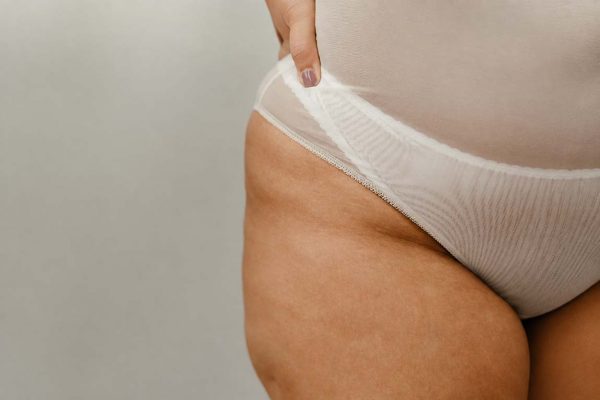
A woman can have legs that feel heavy, look swollen, and seem resistant to changes in diet or exercise, and still have very different things happening beneath the skin.
That is why lipedema and lymphedema are often confused. Both can change the size and shape of the legs. Both can produce heaviness and discomfort. And both may involve the lymphatic system to some degree.
But they are not interchangeable diagnoses.
- Lipedema mainly affects the fat tissue under the skin. It usually causes both legs or arms to become enlarged in a similar way and may also cause pain or tenderness.
- Lymphedema happens when the lymphatic system cannot drain fluid properly, causing swelling in the affected area.
The diagnosis, management, and treatment goals of Lipedema and Lymphedema are different. In general, these are the seven most important differences.
Lipedema vs. Lymphedema Compared
| Feature | Lipedema | Lymphedema |
| Primary issue | Unusual fat buildup under the skin | Fluid buildup caused by poor lymph drainage |
| Typical pattern | Usually symmetrical and bilateral | May affect one or both limbs |
| Feet | Usually spared | May be affected |
| Pain or tenderness | Common | Heaviness, tightness or discomfort may occur |
| Easy bruising | Frequently reported | Not a defining feature |
| Causes | Not fully understood | Primary lymphatic abnormality or secondary lymphatic damage |
| Treatment focus | Symptom control and tissue management | Swelling control and lymphatic management |
1. The Core Problem is Different
The simplest way to understand lipedema vs. lymphedema is to ask what tissue is primarily affected.
- With lipedema, the central problem involves subcutaneous adipose tissue, which is the layer of fat directly beneath the skin. The 2026 Lipedema World Alliance consensus says that untreated lipedema usually causes a similar buildup of fat in both legs or arms, often with pain or discomfort.
- On the other hand, Lymphedema starts with inadequate lymphatic drainage.
The CDC offers a useful analogy: “Lymph nodes act like a drain in your sink.” When lymphatic drainage is disrupted, fluid cannot move normally out of the tissues, so swelling develops.
Treating excess lymphatic fluid is not the same clinical problem as treating abnormal, painful adipose tissue.
2. Lipedema Usually Appears on Both Sides
Imagine someone whose thighs and lower legs have gradually become larger, but the change is strikingly similar on the right and left.
This pattern points clinicians in a different direction than swelling confined mainly to one leg.
- Lipedema classically produces bilateral, symmetrical enlargement. The legs are usually affected, and the arms may also be involved.
- Lymphedema is less predictable. It may affect one limb or both depending on the reason lymphatic drainage has been disrupted.
For example, someone who develops swelling after lymph-node surgery or radiation treatment may notice changes predominantly on the treated side. Cancer treatment is one recognized cause of secondary lymphedema.
Symmetry, therefore, is a clue.
3. Look at the Feet, Not Just the Legs
One of the more useful differences can appear at the ankle.
- In classic lipedema, abnormal fat distribution usually extends down the legs but spares the feet. The transition can sometimes create a distinct cuff-like appearance around the ankle.
- Lymphedema can behave differently. Swelling may extend into the foot and toes.
Doctors may also check the Stemmer sign, which is a simple test used to look for lymphedema by gently pinching and lifting the skin at the base of a toe or finger. A positive result can support a diagnosis of lymphedema, while the sign is usually negative in lipedema.
But there is an important caveat: a negative Stemmer sign does not rule out lymphedema, and someone with lipedema plus lymphatic dysfunction may develop a positive sign.
4. Pain and Easy Bruising Point More Toward Lipedema
Not every enlarged or swollen leg is painful. The type of discomfort can offer useful clues.
- Lipedema: People with lipedema often have pain, tenderness and sensitivity when the tissue is pressed. Easy bruising, sometimes without any obvious injury, is also another clue.
- Lymphedema: May cause a feeling of heaviness, tightness, fullness or aching. But it does not usually cause easy bruising or tenderness when fatty tissue is pressed.
It is important to remember that bruising alone does not mean someone has lipedema. Bruising can have many different causes.
5. “Swelling” Does Not Mean the Same Thing in Both Conditions
This is where everyday language can create confusion.
A patient may simply say, “My legs are swollen.” Clinically, that description does not tell us whether the increased volume comes primarily from fat, fluid, inflammation, venous disease, or a combination.
- In lipedema, enlargement is principally associated with subcutaneous adipose tissue.
- In lymphedema, impaired lymph transport allows fluid to accumulate within tissues. Over time, chronic lymphedema can also change the surrounding tissue, so advanced cases do not necessarily look or feel like simple fluid retention.
There is another important point: lipedema and lymphatic problems can happen at the same time. Some people with lipedema may also develop problems with lymph fluid drainage as the condition progresses.
That is one reason visual diagnosis from photographs or social media comparisons can be misleading.
6. The Causes and Triggers Are Different
People often assume lipedema is simply caused by weight gain. Lipedema and obesity are two different conditions but they can occur together.
- Lipedema: The exact cause is not yet fully known. Researchers are looking at possible links to genetics, hormones, blood vessels, inflammation and connective tissue.
- Lymphedema: Most often caused by a problem with the lymphatic system.
- Primary lymphedema develops because the lymphatic system itself does not form or work normally.
- Secondary lymphedema can develop after damage to the lymphatic system, such as from lymph-node surgery, radiation, injury, or certain diseases.
A person’s medical history can therefore provide important clues when doctors are trying to tell lipedema and lymphedema apart.
7. Treatment Has Different Goals
Compression is often mentioned in conversations about both conditions, which can create the impression that their treatment is essentially the same.
It is not.
- For lipedema, compression may help symptoms such as pain or heaviness, particularly alongside physical activity, but it does not simply “drain away” the abnormal adipose tissue. Experts recommend individualized management based on symptoms, function, associated conditions, and patient goals.
- For lymphedema, treatment is centered on controlling swelling and supporting lymphatic drainage. Depending on the patient, management may involve compression, exercise, skin care, manual lymphatic drainage, and other components of decongestive therapy.
For appropriately selected patients with significant symptoms, surgical reduction of lipedema tissue may also be considered. Anyone exploring that option should understand the evidence, limitations and individualized risks rather than viewing surgery as an automatic next step.
How Do Doctors Tell Lipedema and Lymphedema Apart?
There is no single glance, symptom, or home test that reliably settles the question.
For lipedema, diagnosis remains primarily clinical. A clinician considers the pattern of tissue enlargement, symmetry, tenderness, foot involvement, medical history, and other findings while excluding alternative explanations. Overlapping features with other adipose and lymphatic disorders will require more careful evaluation.
Lymphedema is also often diagnosed from history and examination. If the diagnosis is not clear, specialized imaging or other assessment methods can be helpful to evaluate lymphatic function.
Feet that are spared can support a lipedema diagnosis, but they do not confirm it. One-sided swelling may suggest lymphedema or another problem, but it still needs evaluation. Easy bruising may occur with lipedema, but it has many other causes.
And sudden new swelling deserves particular attention. Rapid one-sided leg swelling, redness, warmth, severe pain, chest pain, or shortness of breath should be evaluated promptly because potentially serious conditions can produce similar symptoms.
Can You Have Lipedema and Lymphedema at the Same Time?
Yes.
The older idea that lipedema and lymphedema belong in completely separate boxes is too simplistic. Research recognizes that lymphatic dysfunction can coexist with lipedema.
If your legs are persistently disproportionate, painful, unusually tender, easy to bruise or increasingly swollen, a clinician familiar with lipedema and lymphatic disease can evaluate the overall pattern rather than a single symptom.
For people specifically concerned that their symptoms may represent lipedema, EmpowerMD offers consultations focused on diagnosis and treatment options.
This article is educational and is not a substitute for individualized medical diagnosis or treatment.