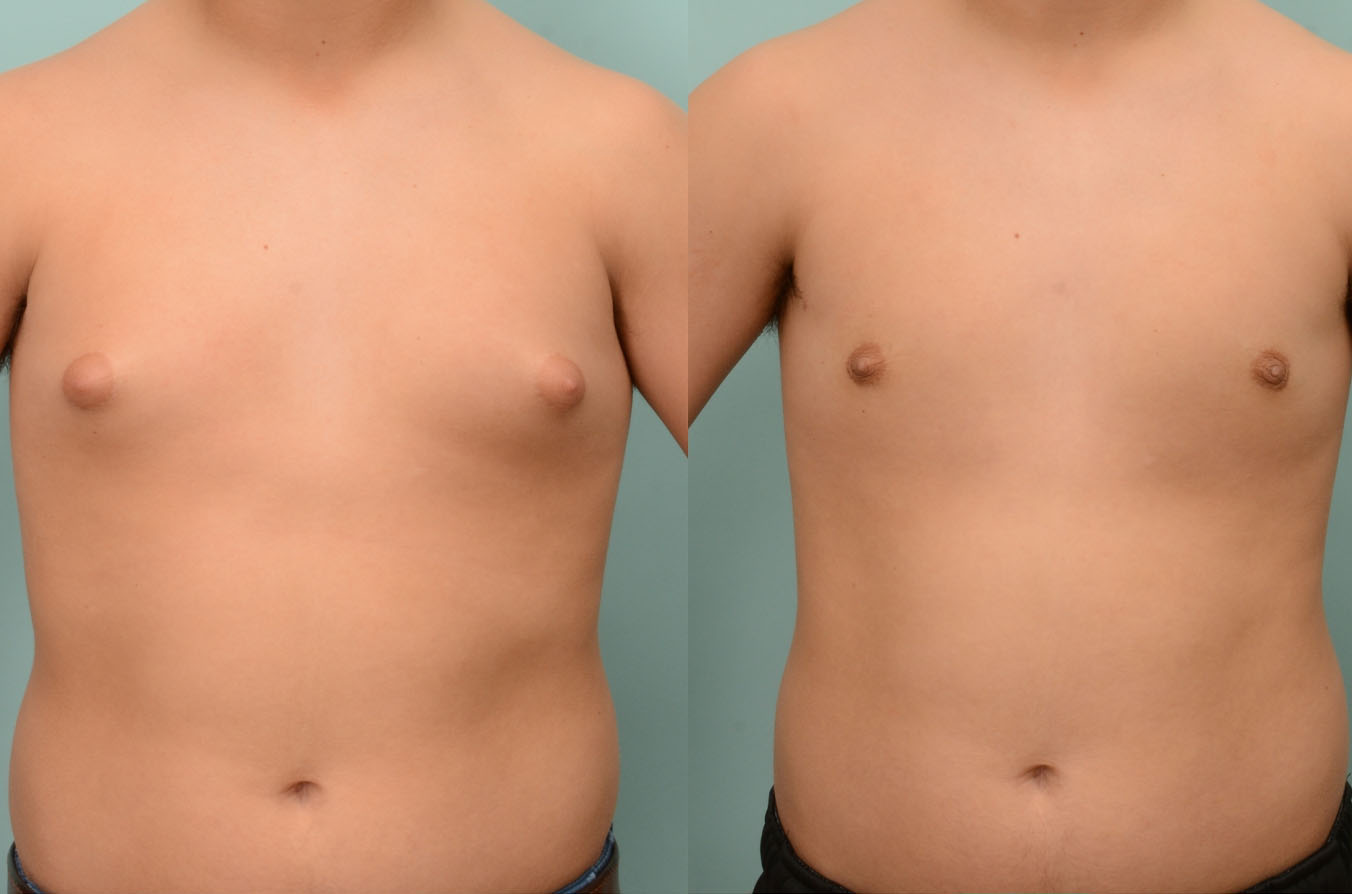
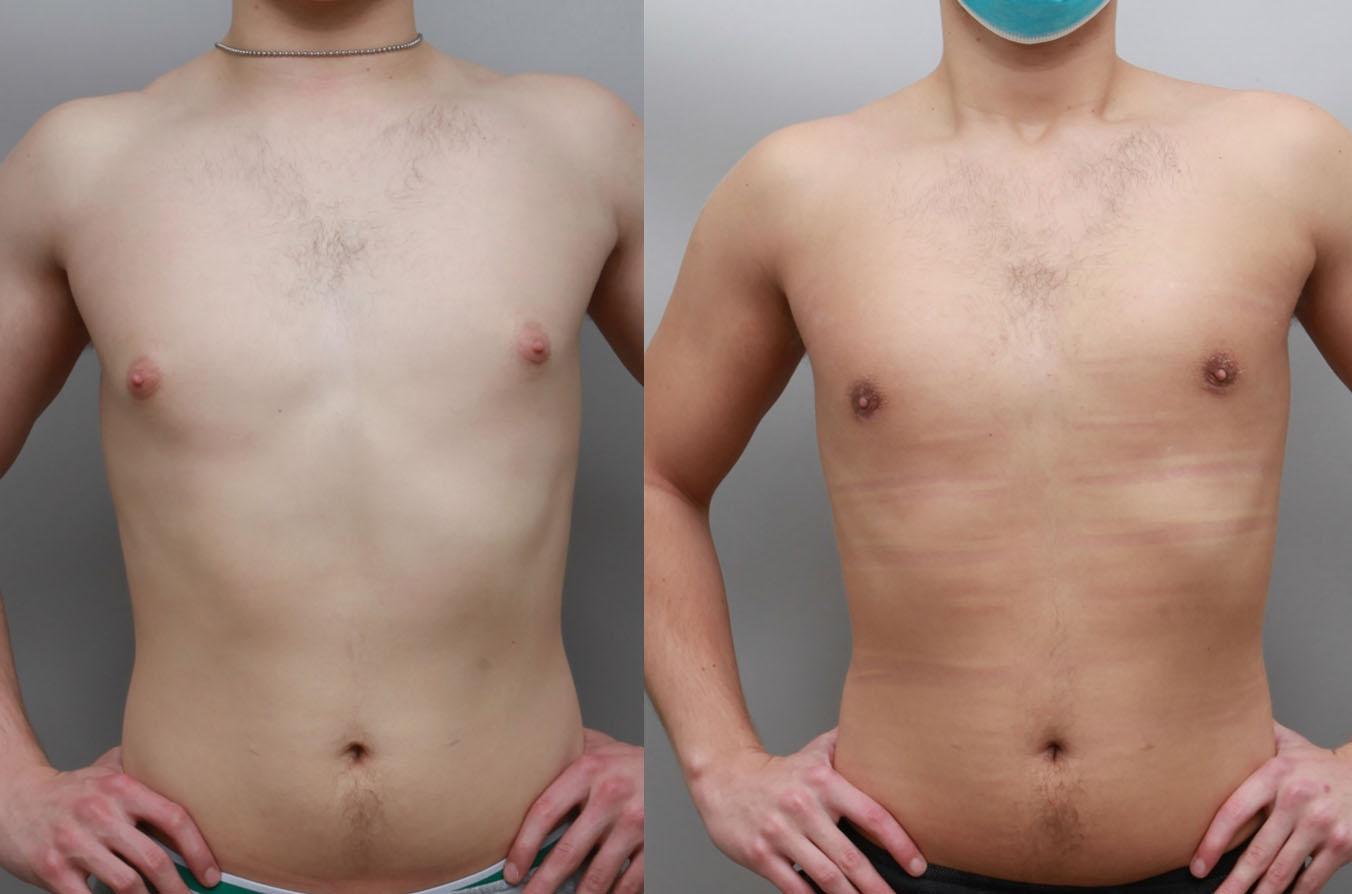
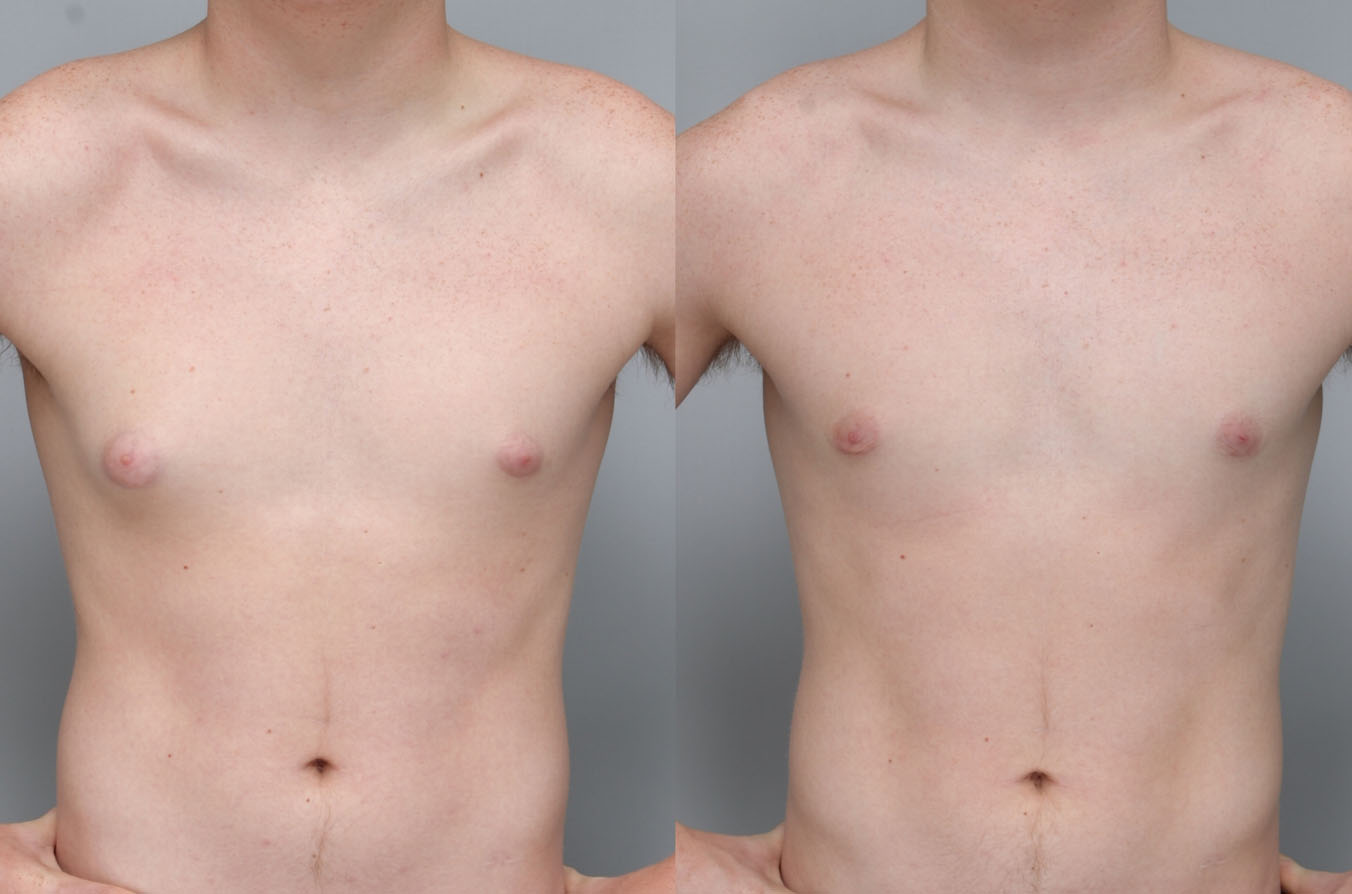
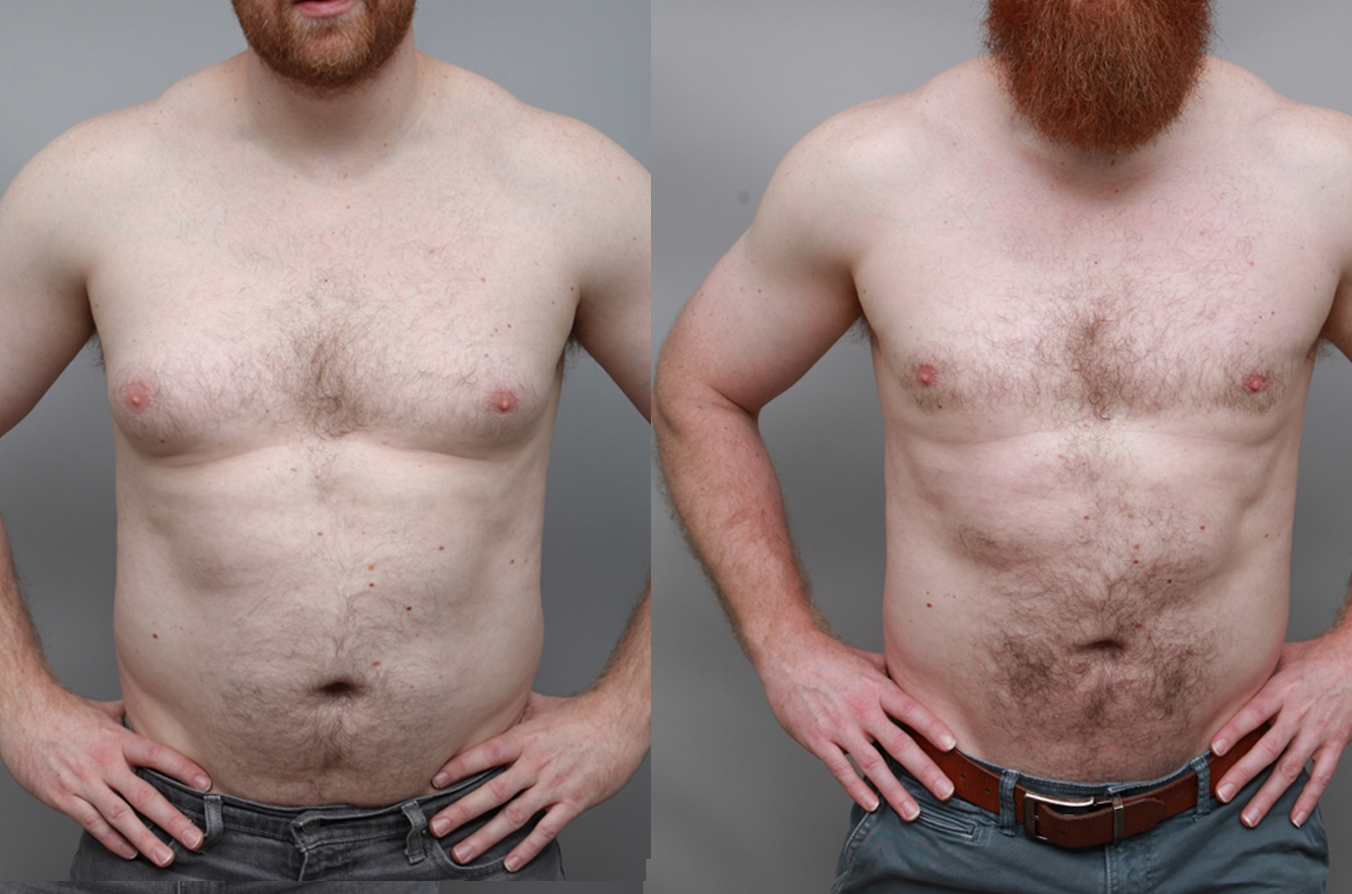
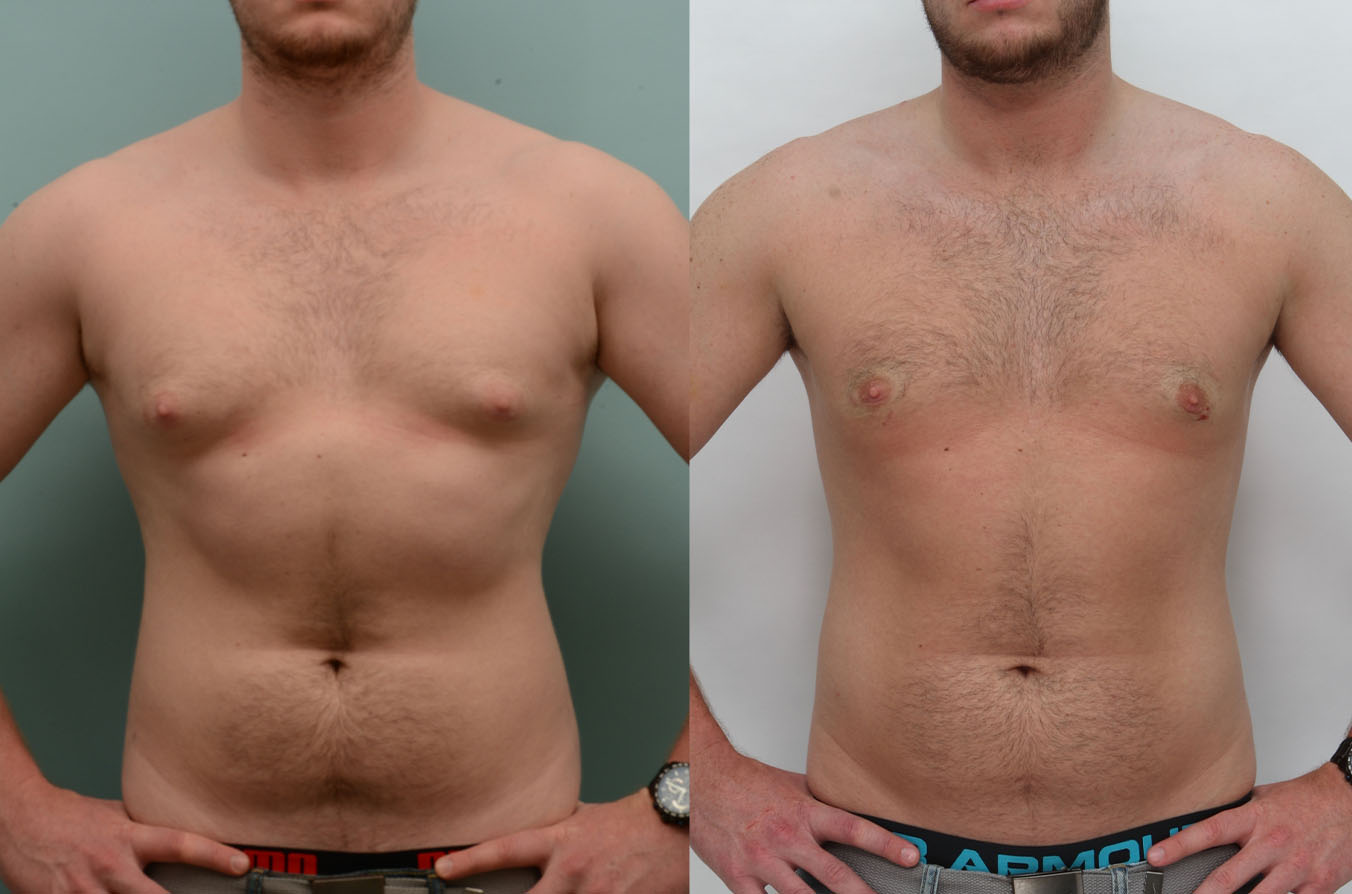
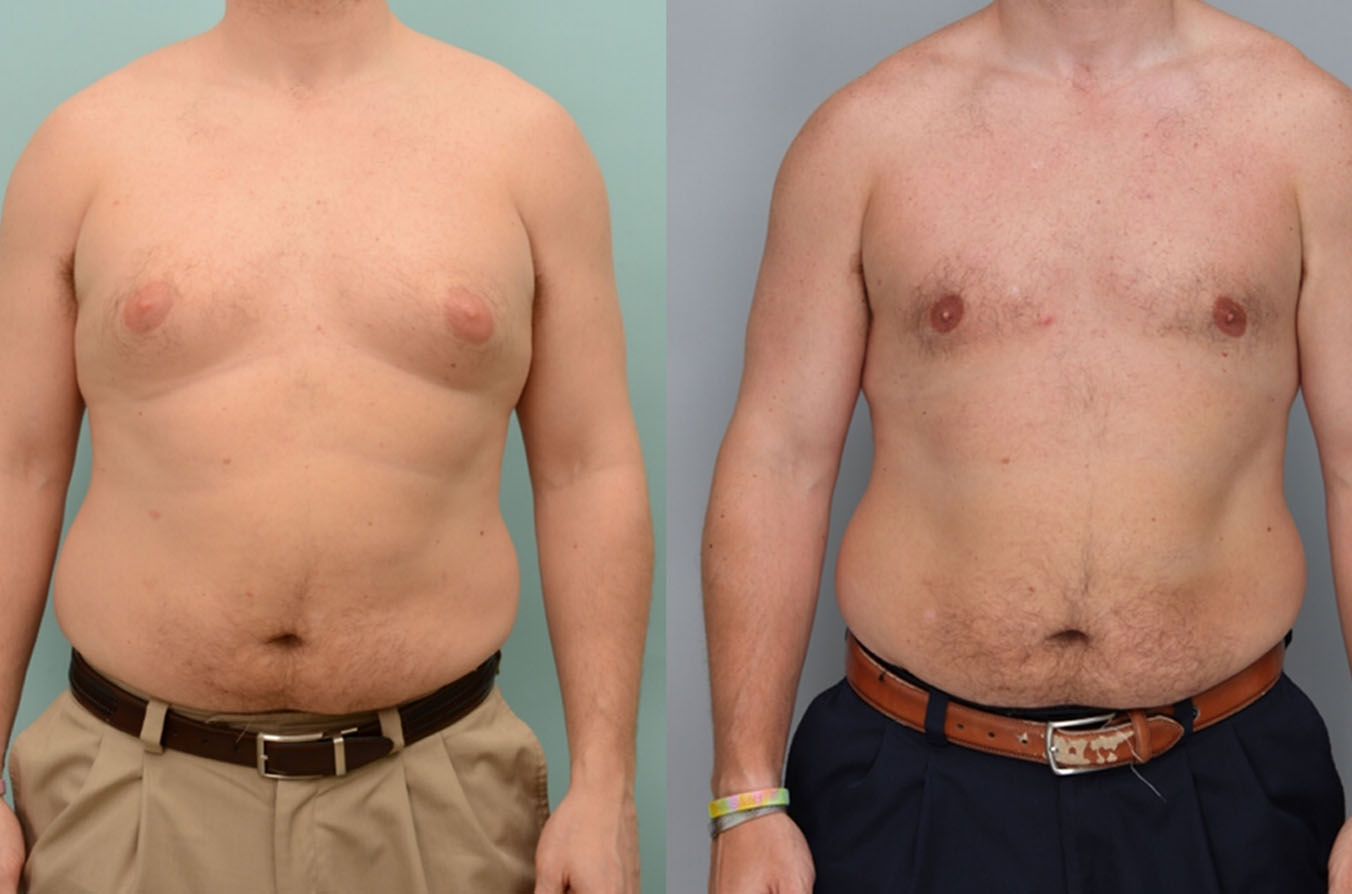
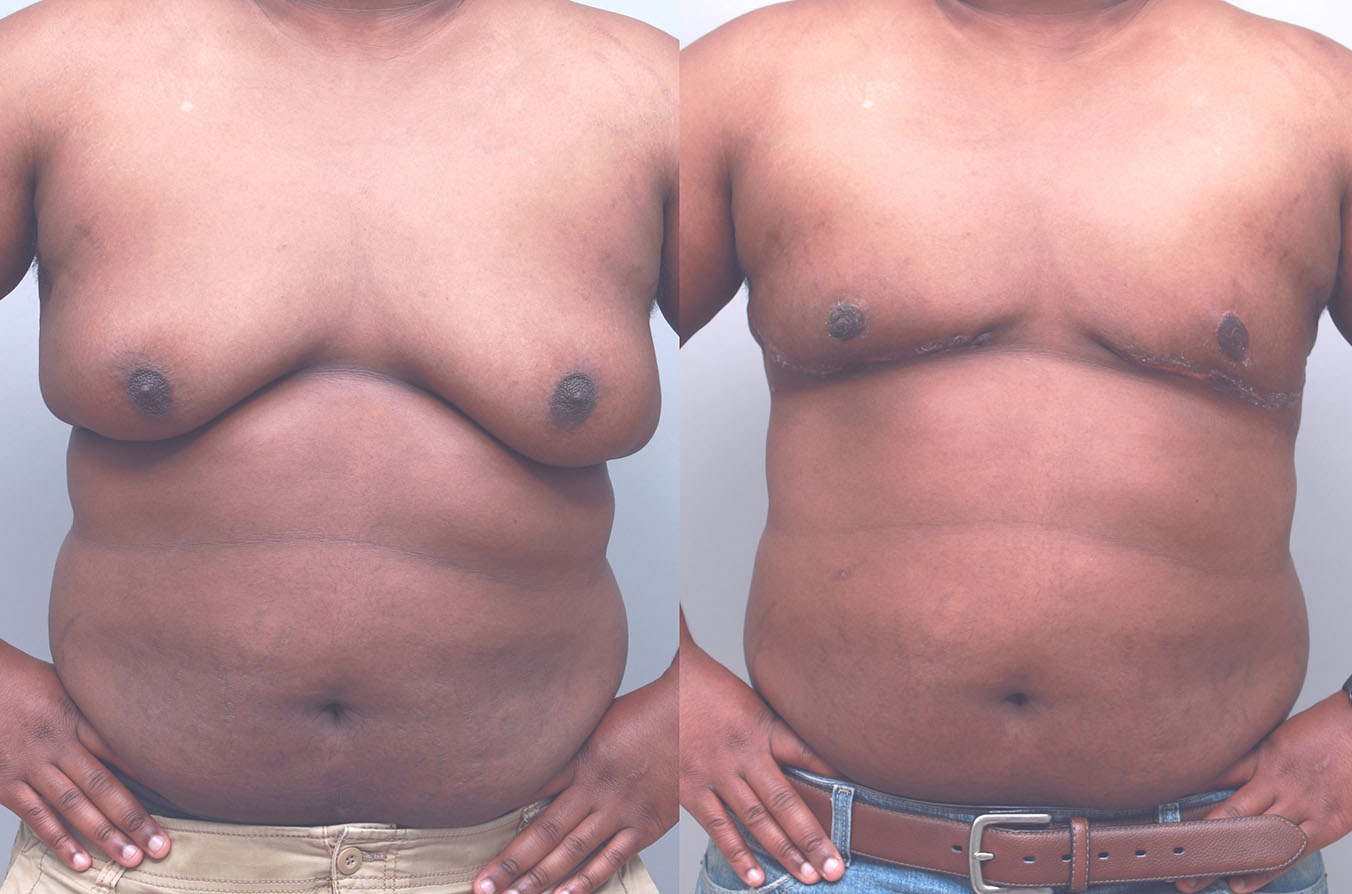
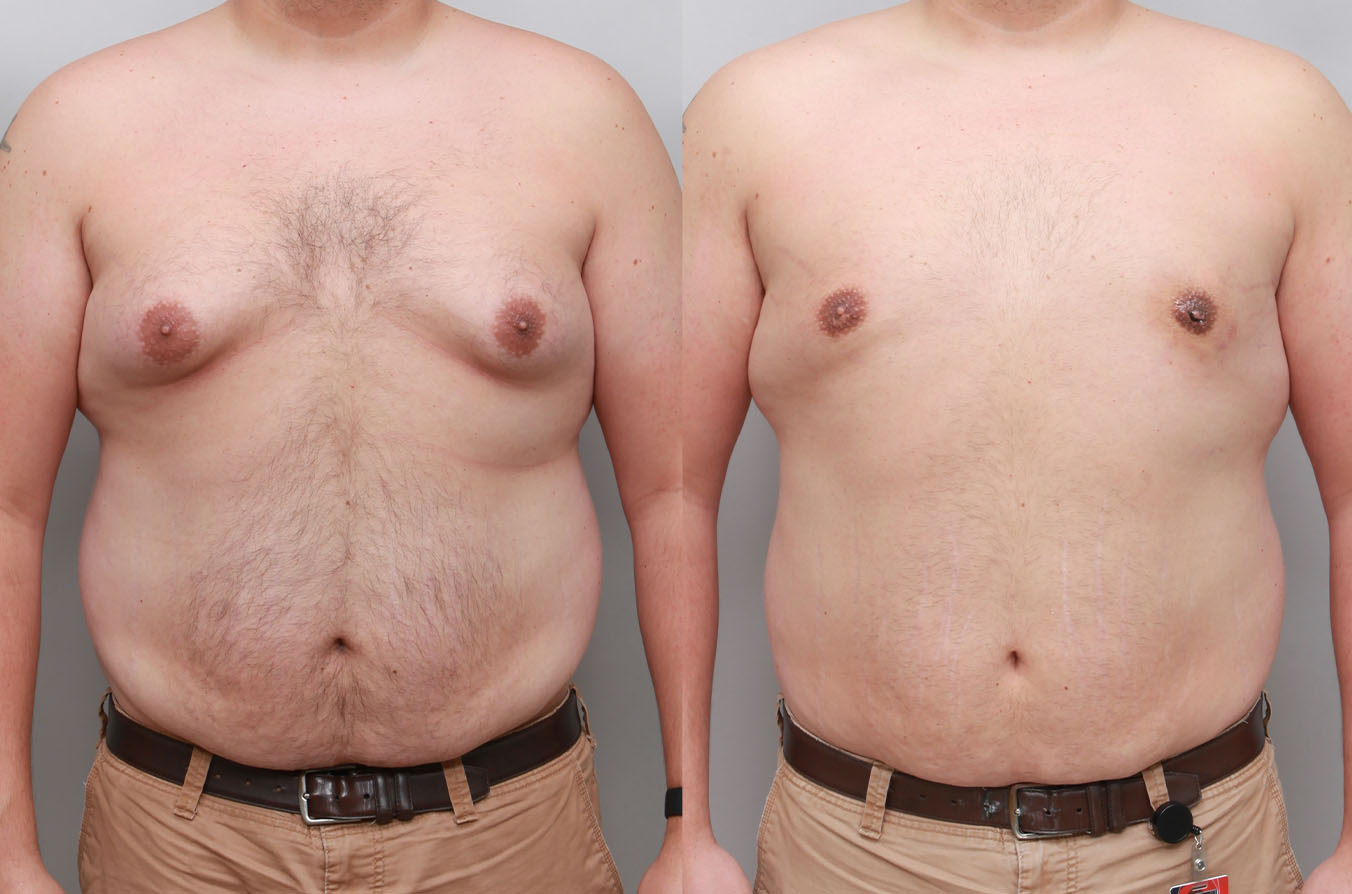
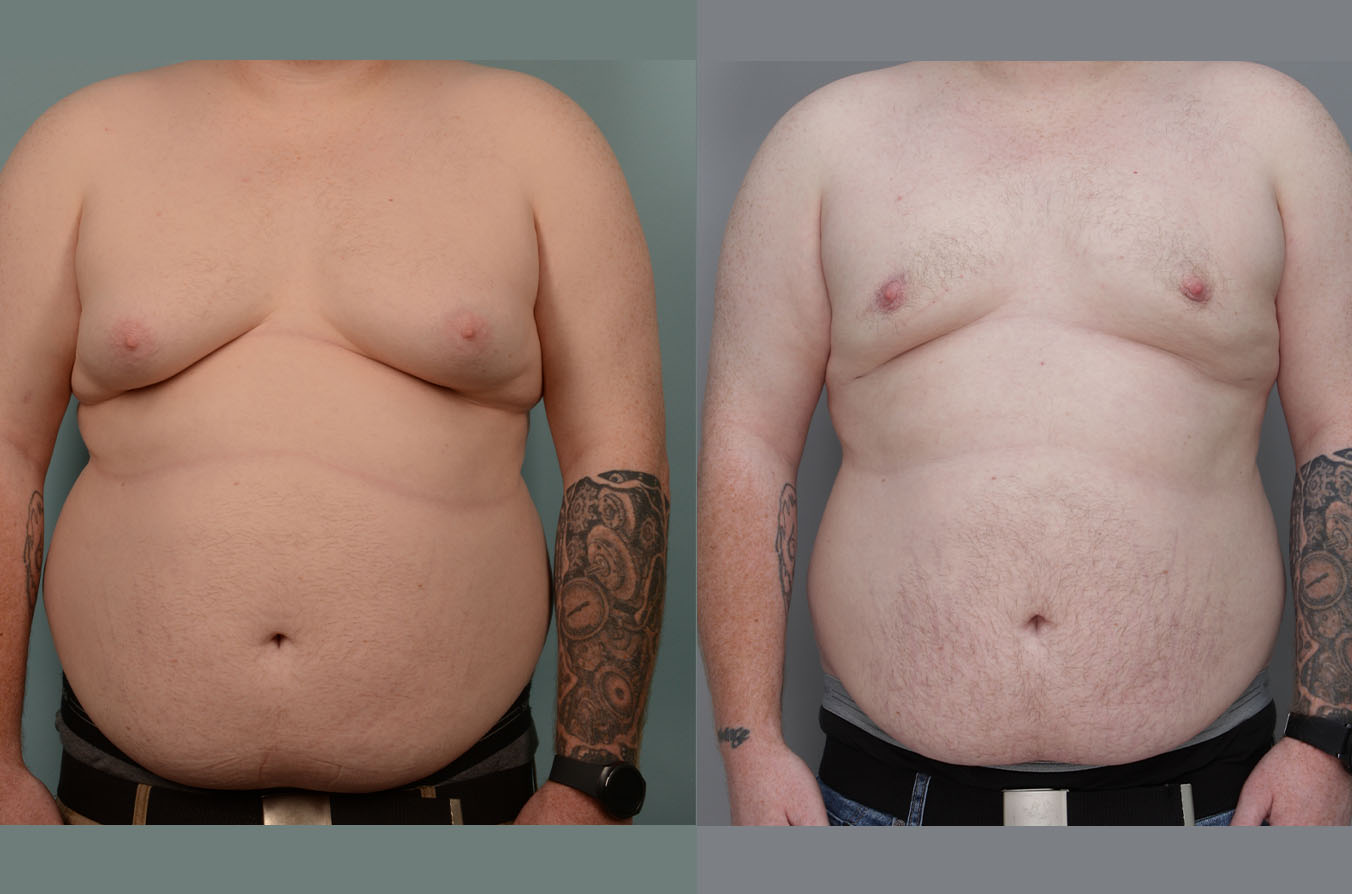
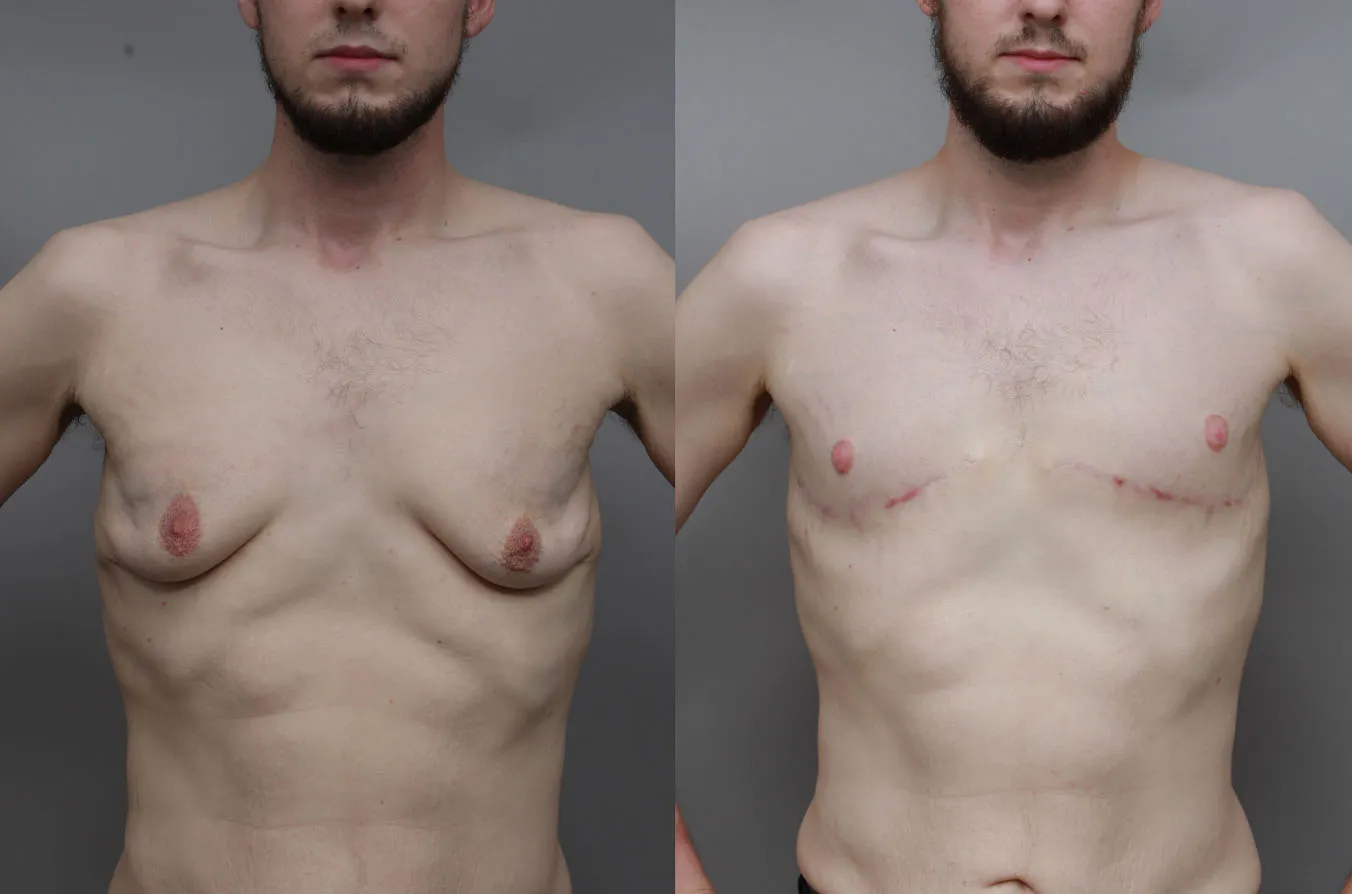
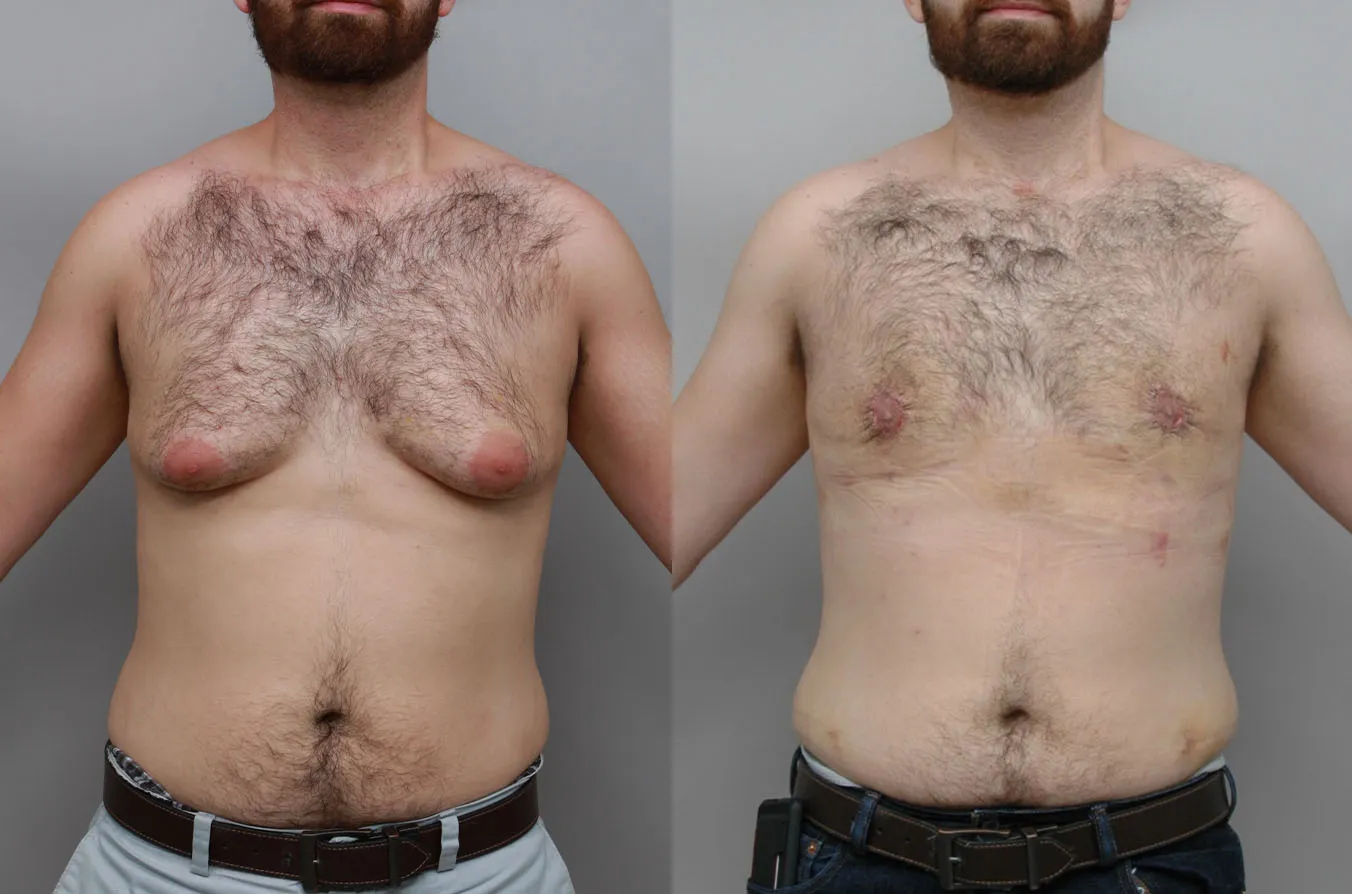
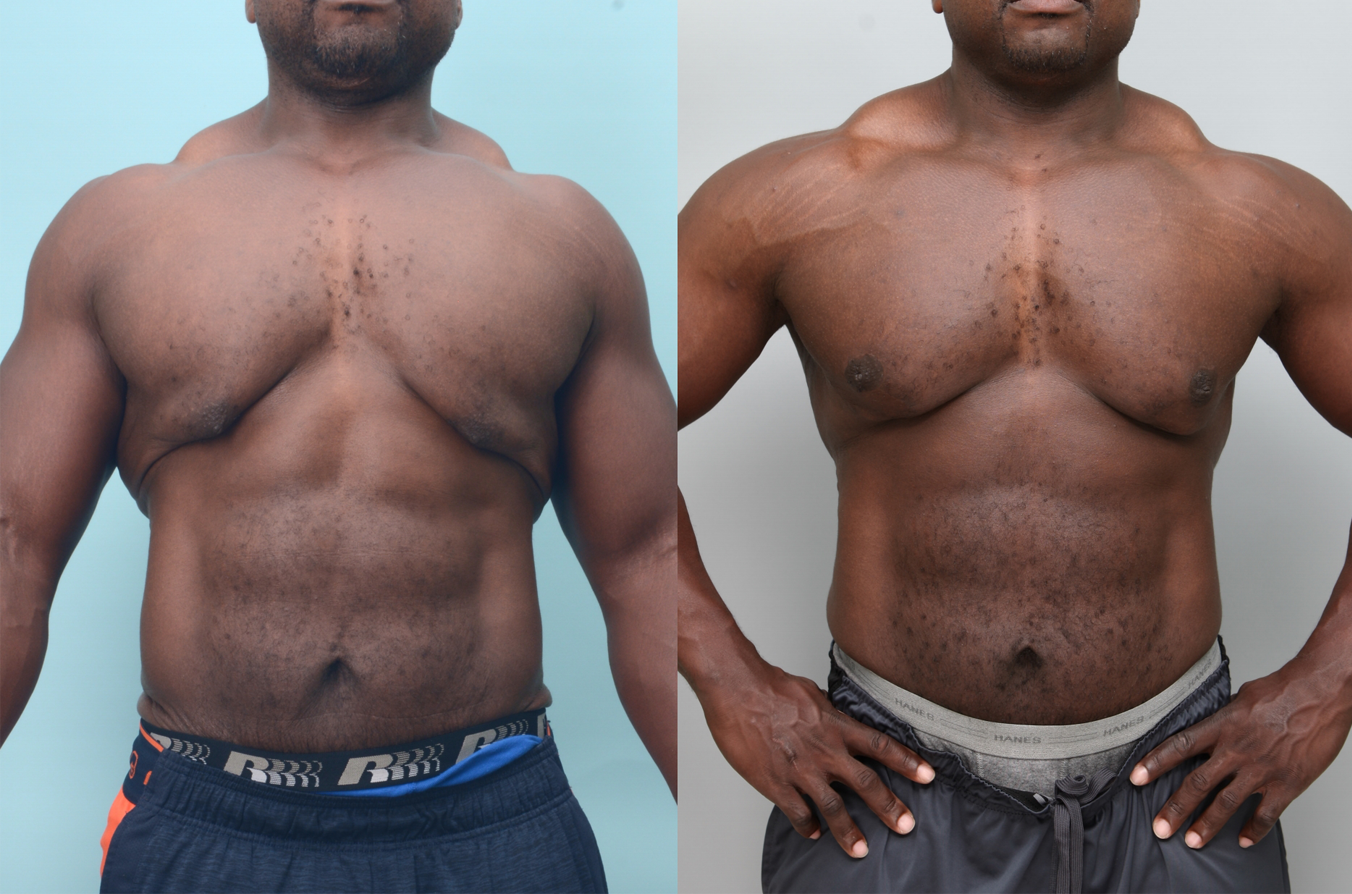
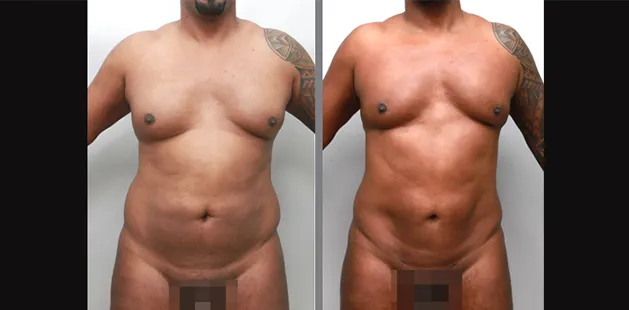
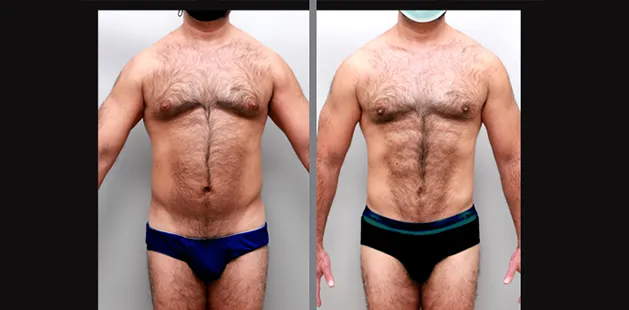
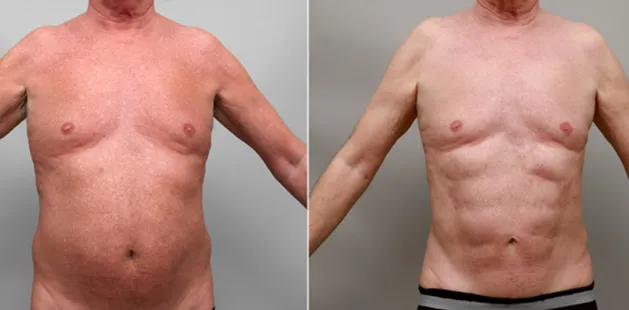
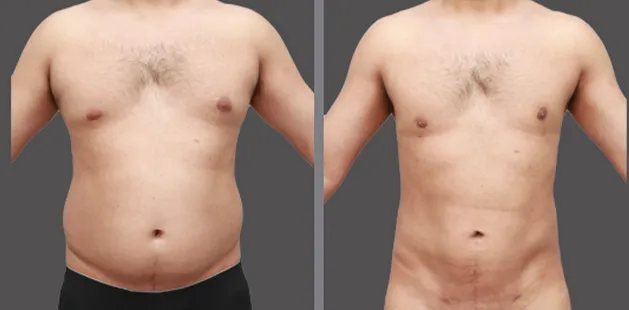
Proven Gynecomastia Surgery Expert in Charlotte, NC
Restore a firmer, flatter, more masculine chest — by the surgeon Charlotte men have trusted for over 30 years.




"Almost every guy I see has lost confidence, felt insecure for years. I can restore that guy's confidence in one hour. It doesn't matter if he's a 15-year-old teen athlete or a dad going to the pool with his two-year-old. Every guy should feel confident in his own skin."
— Jeffrey A. Ditesheim, MD, FACS · 30 years specializing in gynecomastia Tweet
What Is Gynecomastia?
Gynecomastia is the overdevelopment of breast tissue in men. It can affect one side or both. The cause is usually a hormonal imbalance, certain medications, genetics, or significant weight changes. It is not dangerous to your physical health, but for most men it causes years of emotional and social discomfort.
The single most important thing to know: true glandular breast tissue does not shrink with diet and exercise. If gynecomastia is glandular, surgery is the only effective treatment.
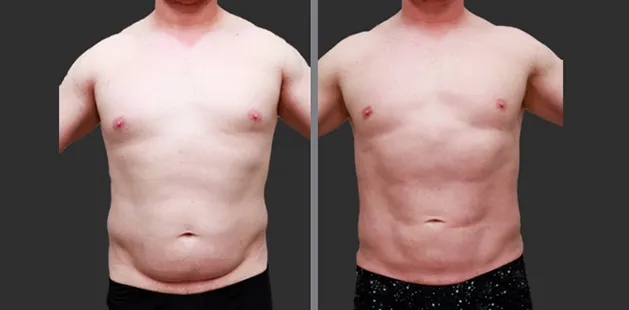
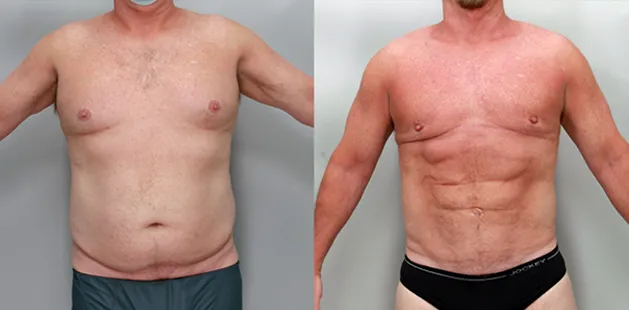
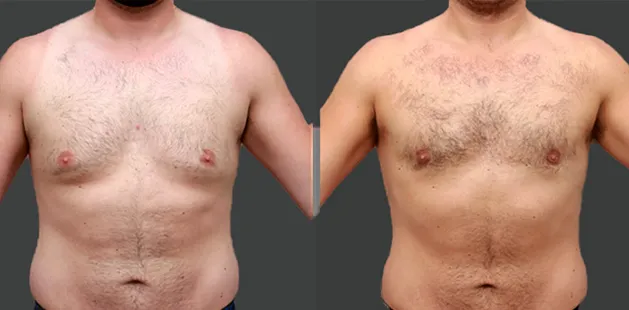
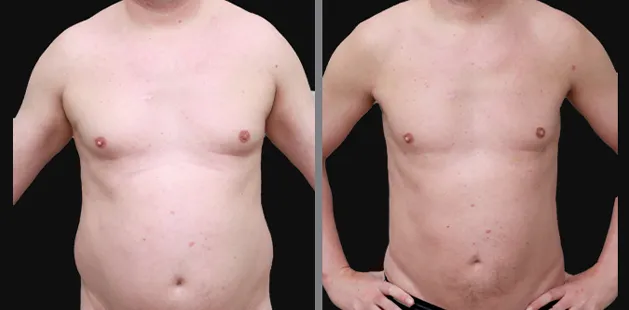
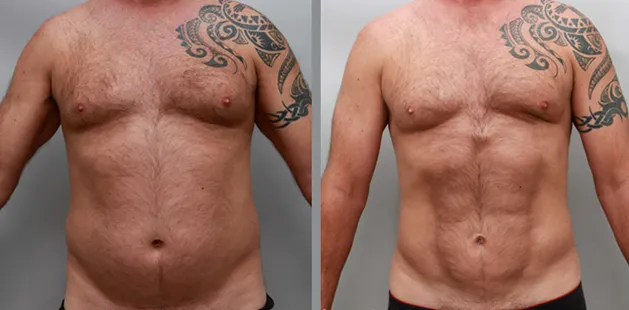
Living with an enlarged male chest takes a toll on confidence — avoiding the pool, dreading fitted shirts, feeling uncomfortable in your own skin. At Ditesheim Cosmetic Surgery, we use advanced techniques to remove excess glandular tissue and fat and restore a natural, masculine chest contour, with most procedures completed in about one hour.
Are You a Good Candidate?
You may be a strong candidate for gynecomastia surgery if any of these describe you:
- You're bothered by puffy or enlarged nipples
- You have enlarged chest tissue or excess chest fat
- You feel self-conscious about the appearance of your chest
- Your chest fullness hasn't improved with consistent exercise
- You have realistic expectations about surgical results
The most reliable way to know is a consultation. Dr. Ditesheim will identify whether your tissue is fatty, glandular, or both, assign your grade, and give you a treatment recommendation and price the same visit.
Identify Your Gynecomastia Grade And Know the Cost
Understanding which grade you have tells you what the surgery will involve and what it will cost. Most men recognize themselves in one of these four descriptions.
| Grade | Common Name | How Men Describe It | Typical Treatment | Starting Price |
|---|---|---|---|---|
| Grade 1 | Puffy Nipples | "A nut or ball under the nipple; the nipple over-projects when warm." Common in teens, lean guys, bodybuilders. | Excision of breast tissue through a small hidden incision. Awake option ideal. | $7,950 |
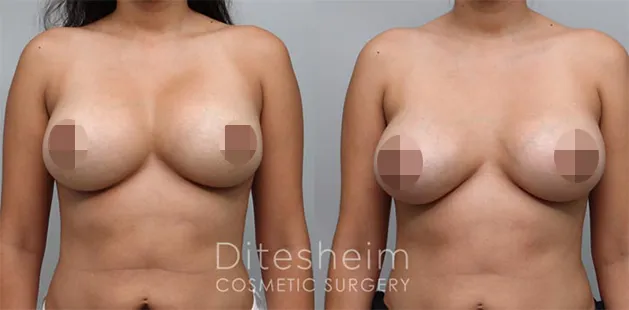
| Grade 2 | B-Cup Breast Shape | Round, feminine chest shape; the nipple is the most projecting point. Most common gynecomastia. | Liposuction + glandular excision. Awake option works well. | $7,950 |
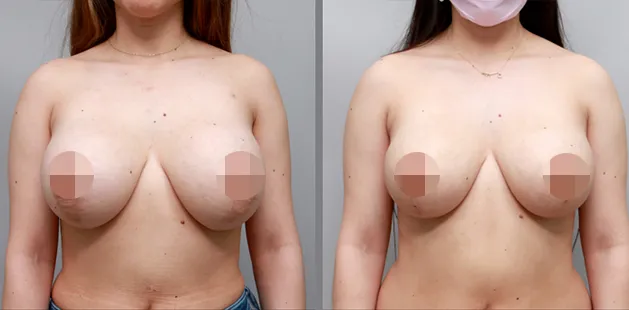
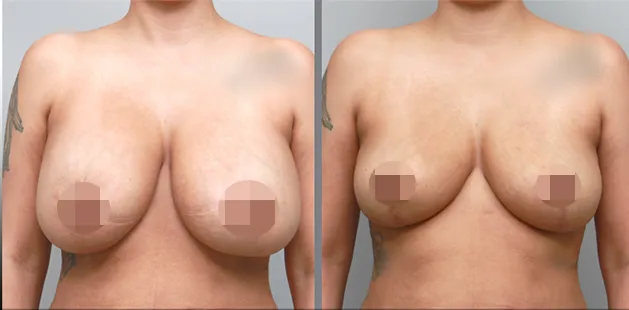
| Grade 3 | Low Nipple / Full Chest | Visible rounded chest with low nipple position or larger breast shape. Often larger-frame men. | Lipo + excision; may add Renuvion, crescent skin excision, or nipple repositioning. | $11,700 |
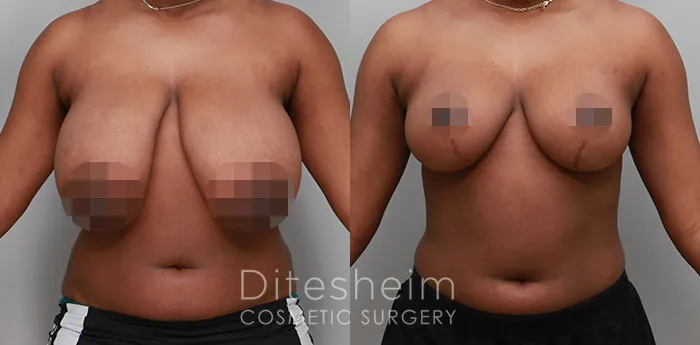
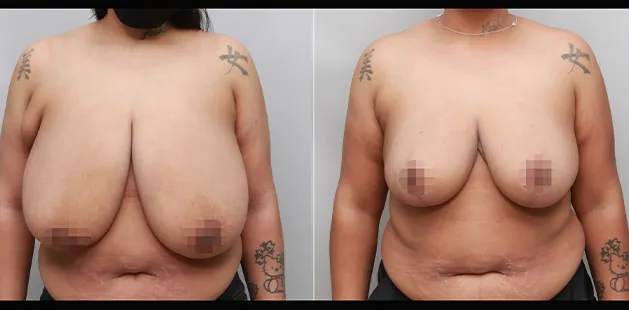
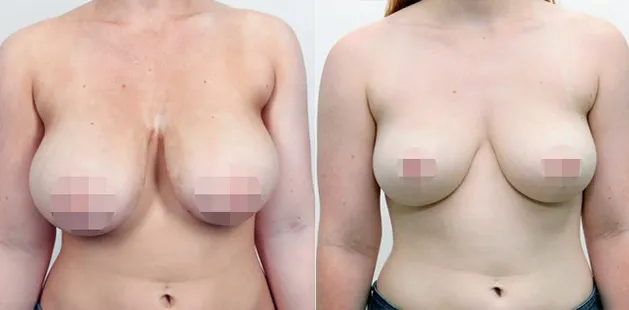
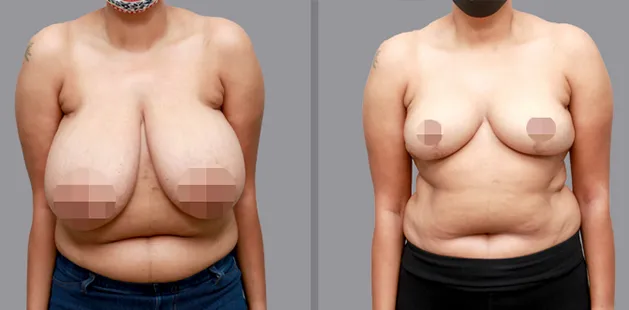
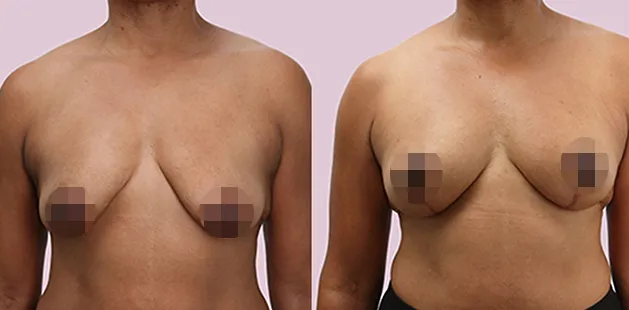
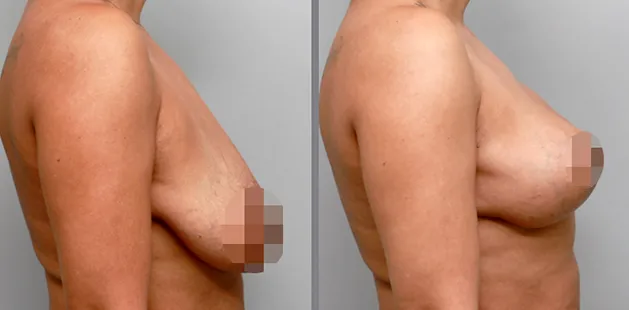
| Grade 4 | Hanging Breast / Nipple | Skin and nipple hang below the chest crease; almost always after significant weight loss. | Tissue removal, skin excision, nipple repositioning. Longer scar in chest crease. | $18,790 |
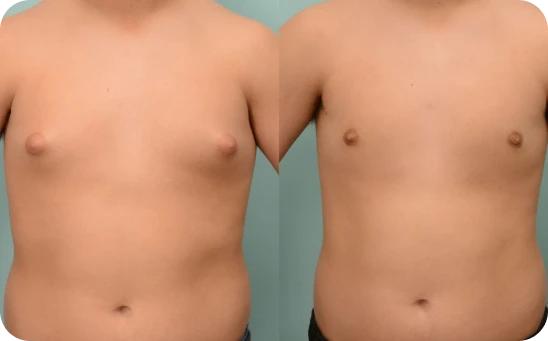
Grade One
Puffy Nipples
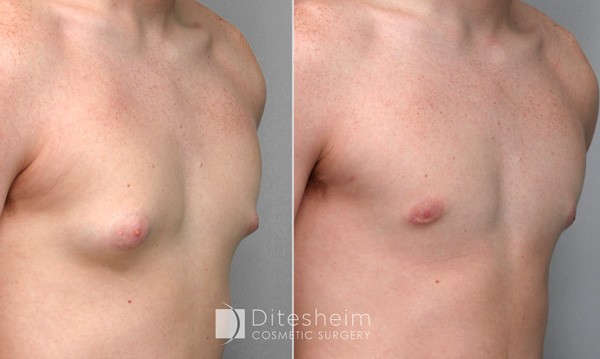
Slight swelling around the nipple, with the breast tissue feeling like a nut or small ball directly beneath. When you’re warm, the thin nipple skin relaxes and the tissue pushes the nipple outward. Most common in teens, lean men, and bodybuilders. Often hidden under loose clothing but creates daily frustration.
- Treatment: Removal of the firm glandular tissue through a very small, hidden incision.
- Anesthesia: Awake procedure is ideal.
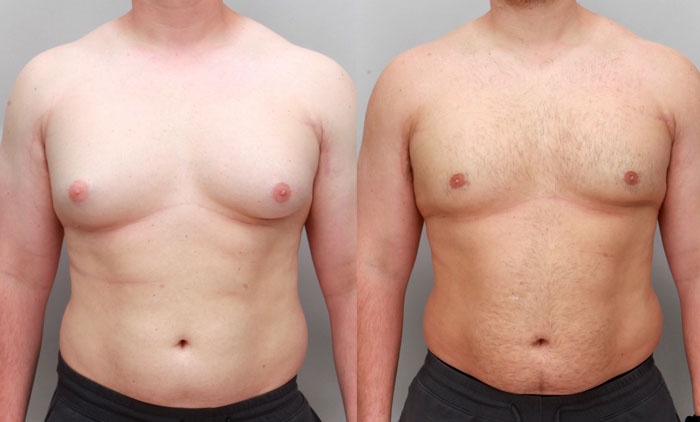
Grade 2
B-Cup Breast Shape
The most common type of gynecomastia. Breast tissue extends beyond the areola, the chest takes a round, feminine shape, and the nipple becomes the most projecting point of the chest — which is exactly what makes shirts uncomfortable.
- Treatment: Liposuction to remove fatty tissue plus surgical excision of glandular tissue. Both are needed — liposuction alone cannot remove glandular tissue.
- Anesthesia: Awake option works well.
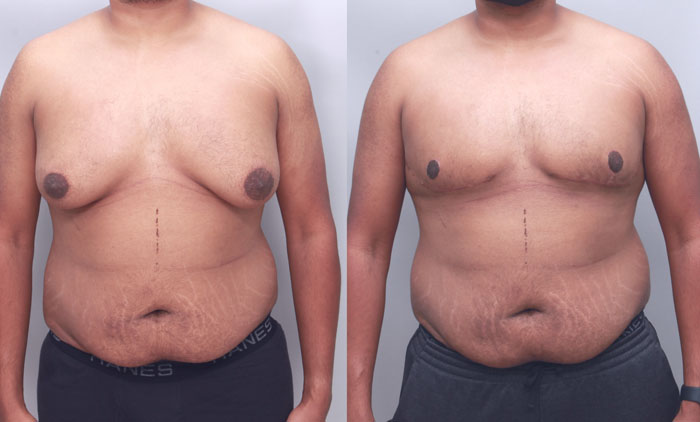
Grade 3
Low Nipple / Full Chest
Tissue is more pronounced and chest anatomy starts to matter. Often seen as a larger breast shape, or as a low nipple position where the nipple sits at the chest crease. Treatment depends on muscle shape, nipple position, and skin quality — which is why this grade is the most variable.
- Treatment: Liposuction and excision may be enough; Renuvion, a crescent skin excision, or nipple repositioning may be added.
- Anesthesia: Awake or general, depending on complexity.
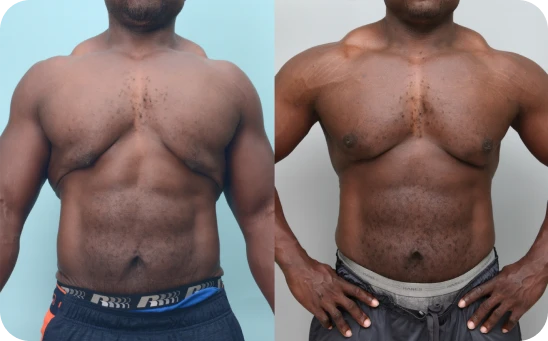
Grade 4
Hanging Breast or Nipple
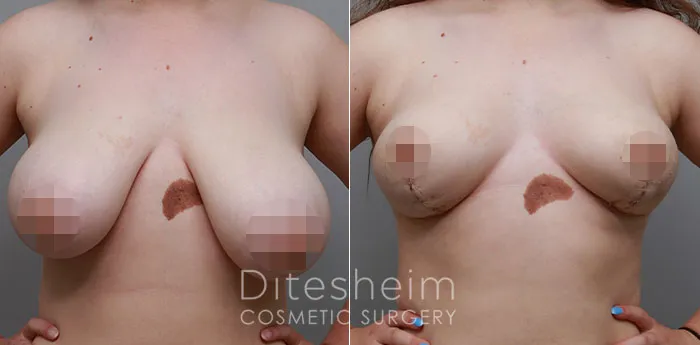
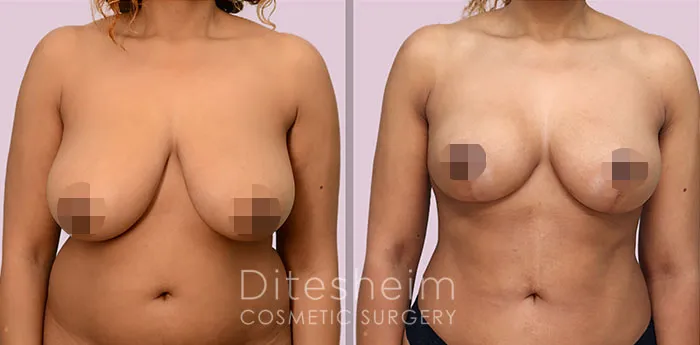
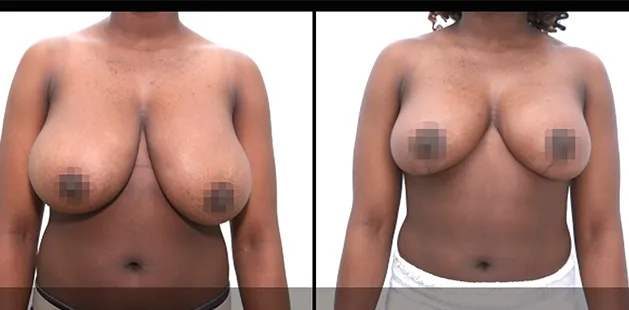
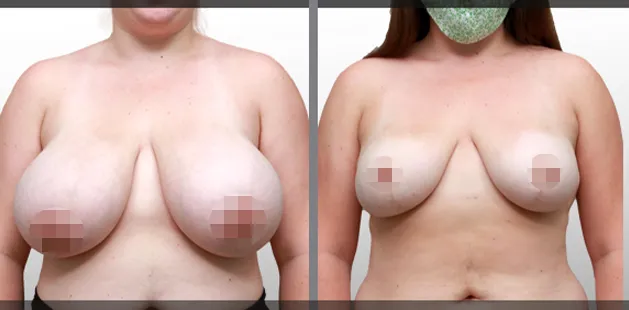
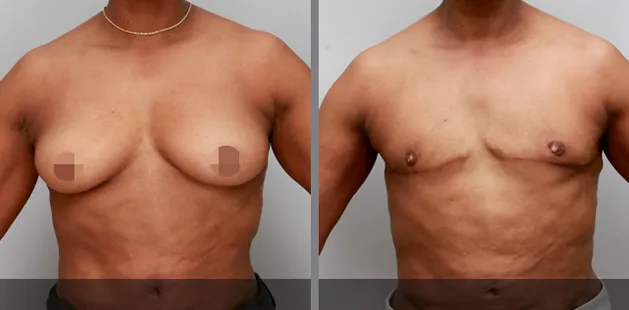
Excess tissue and excess skin create a visibly feminized chest. Almost always seen after significant weight loss, when the skin and nipple fall off the chest muscle and hang below the crease. Also seen in higher-weight men where breast tissue spills over a high chest crease.
- Treatment: Removal of breast tissue, excision of excess skin, and repositioning of the nipple. Almost always requires a longer scar in the chest crease.
- Anesthesia: General anesthesia recommended.
Will Working Out Fix My "Man Boobs"?
This is the most common question Dr. Ditesheim hears, and the answer comes in two parts:
- If you’re carrying excess weight and that’s giving you a fuller chest, losing the weight and training your chest can absolutely help.
- If your chest has true glandular breast tissue, no amount of cardio or pressing will remove it. Glandular tissue has to be removed surgically. This is why bodybuilders and lean men still develop “puffy nipples” — they’re not carrying fat, they’re carrying glandular tissue.
If you’ve been training consistently for six months and your chest still has the same shape, that’s almost always the answer.
Awake or Asleep Gynecomastia Surgery: Your Choice
Every patient considering gynecomastia surgery with Dr. Ditesheim has a choice: awake under local anesthesia, or asleep under general. The awake option isn’t a feature we added — it’s a technique Dr. Ditesheim developed over 25 years for a specific kind of patient he kept seeing.
"Years ago, young guys in their early 20s came to see me for gynecomastia. They were living on their own, or embarrassed to ask a partner to come along. So I developed an awake technique — similar to dental work. The chest is completely numb, but you stay awake. You can listen to music or fall asleep on your own."
— Dr. Ditesheim
How Awake Surgery Actually Works
- You arrive, the chest is washed, and sterile drapes are placed.
- Numbing solution is delivered through a jet spray injector — no needle. The chest is completely numb in 1–2 minutes. This is the only part you’ll feel.
- Surgery begins. You’re awake the whole time. Most men listen to music through AirPods; some fall asleep naturally. If you feel anything more than pressure, additional numbing is added immediately.
- When the gynecomastia surgery is done, you sit up, put on a compression vest, walk to recovery, and after 15 minutes you can drive yourself home.
- You can take the day off and rest, or return to desk work that afternoon.
- Shower the next morning. Daily activities resume.
- Check-in with Dr. Ditesheim in the first week. Cleared for the gym at two weeks. Final follow-up at 3–4 months.
Who is Awake Gynecomastia Surgery Best For
- Grade 1 and Grade 2 gynecomastia
- Procedures expected to take under two hours
- Men who want a faster recovery and don’t want a general-anesthesia hangover
- Men who don’t have a partner or family member to drive them
When General Anesthesia is the Better Choice
- Grade 3 or Grade 4 (a more complex gynecomastia surgery)
- Men who are anxious about being awake during surgery
- Men with medical conditions that make awake surgery less suitable
Gynecomastia Surgical Techniques
The right technique depends on your grade and your tissue type. Click to see how each one works.
Liposuction (Vaser & Aquashape)
Used to remove fatty tissue and shape the chest wall. Vaser is ultrasonic; Aquashape is water-assisted. Both preserve nerves, blood vessels, and ligaments, which protects the result and shortens recovery. In a gynecomastia case, Vaser energy contracts tissue in the upper chest and emulsifies fat in the lower chest before liposuction removes it.
Glandular Tissue Excision
True glandular tissue is white and rubbery — and cannot be removed by liposuction, no matter how aggressive. It has to be excised through a small, hidden incision (typically 1–2 cm at the lower border of the areola). Almost every gynecomastia patient needs at least some glandular excision; without it, puffy nipples persist.
Renuvion Skin Tightening
Introduced in 2019, Renuvion is a heat/helium radiofrequency technology designed for “scarless skin tightening.” It works by delivering rapid pulses of heat to the ligaments that anchor skin to muscle, shortening them so the skin draws closer to the chest wall. Best for men with mild skin laxity and good retained elasticity, usually those with weight loss under 80 lb. Avoids adding scar.
Skin Excision & Nipple Repositioning
Reserved for men with significant skin excess, usually after substantial weight loss or with a low nipple position. Smaller cases can be addressed with a donut (periareolar) pattern, hiding the scar around the nipple. Larger cases require a horizontal scar in the chest crease, sometimes extending laterally. The goal is a smooth, taut skin drape over the chest muscle with the nipple in correct masculine position.
Recovery Timeline for Gynecomastia Surgery

1-3 Days
Rest and wear your compression vest. Mild soreness and swelling are normal. Most patients manage discomfort with over-the-counter meds.
1 Week
You can return to light activity or work. Compression garment still worn. Bruising fades
2-3 Weeks
Most swelling resolves. You’ll start to see early results. Avoid upper body workouts or heavy lifting.
4-6 Months
Resume exercise. Chest appears flatter, more sculpted, and natural.
3-6 Months
Final results set in as tissues heal and settle. Scars continue to fade.
1-3 Days
Rest and wear your compression vest. Mild soreness and swelling are normal. Most patients manage discomfort with over-the-counter meds.
1 Week
You can return to light activity or work. Compression garment still worn. Bruising fades
2-3 Weeks
Most swelling resolves. You’ll start to see early results. Avoid upper body workouts or heavy lifting.
4-6 Months
Resume exercise. Chest appears flatter, more sculpted, and natural.
3-6 Months
Final results set in as tissues heal and settle. Scars continue to fade.
Why Choose Dr. Ditesheim
Gynecomastia is not a side procedure at this practice. It is the procedure Dr. Ditesheim has built his career around. Over more than three decades, he has performed more than 1,000 gynecomastia surgeries, developed the awake surgical protocol now requested by patients from out of state, and earned a reputation among Charlotte men as the surgeon who treats this condition with the seriousness it deserves.
Credentials
- Board Certified by the American Board of Plastic Surgery (ABPS)
- 30+ years specializing in gynecomastia and male chest contouring
- 1,000+ gynecomastia procedures performed
- Operates exclusively in his Quad A accredited on-site surgical suite
- Summa cum laude, University of Pennsylvania
- MD, NYU School of Medicine
- Advanced surgical training: Vanderbilt, Wake Forest, Massachusetts General Hospital (Harvard Medical School affiliate)

Testimonials
What Our Patients Are Saying
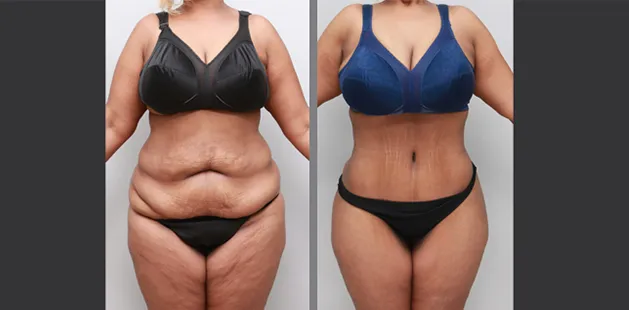
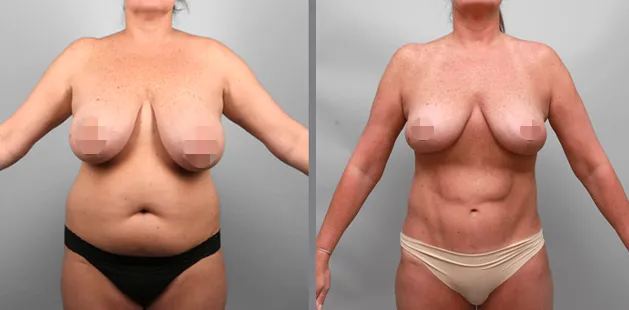
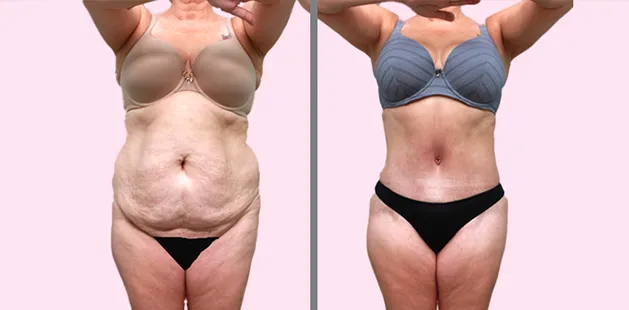
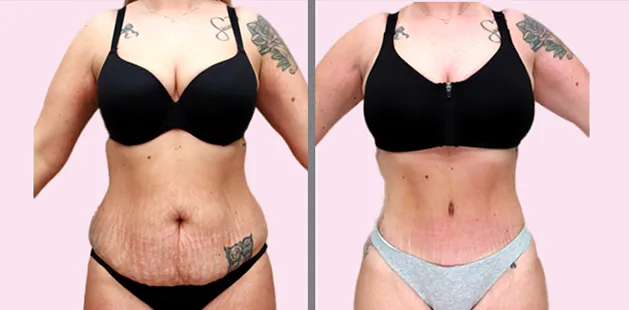
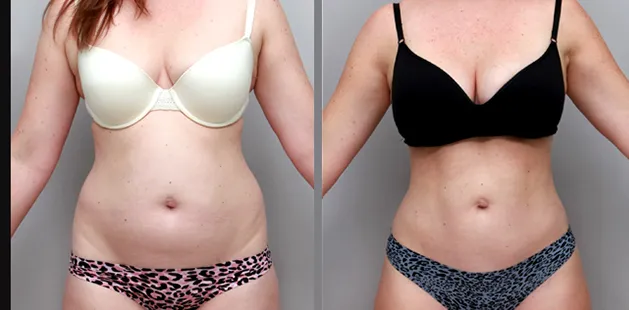
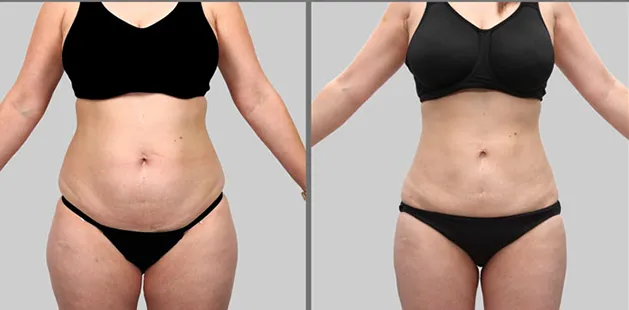
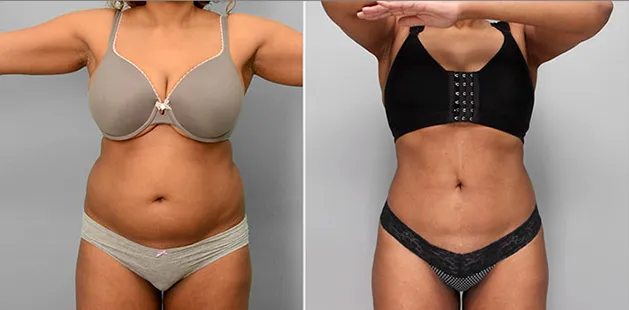
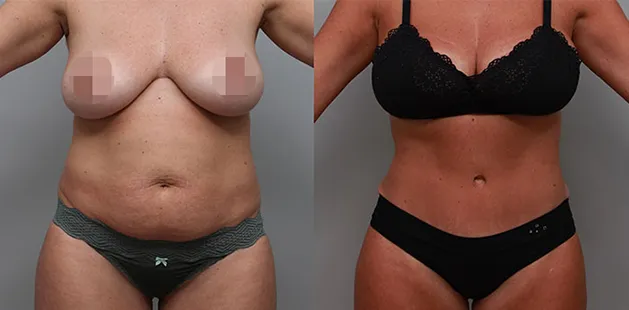
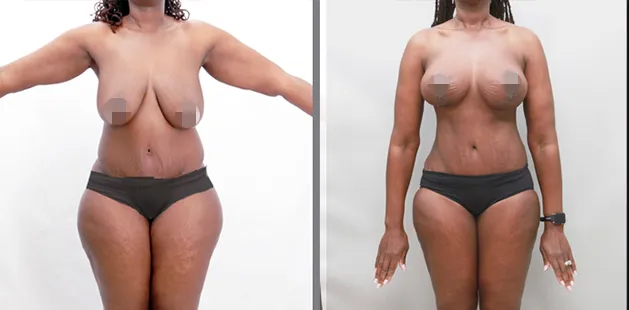
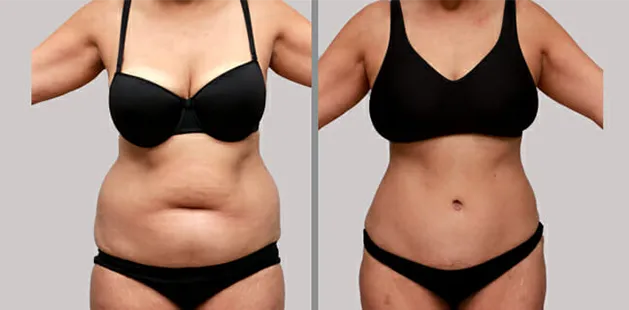
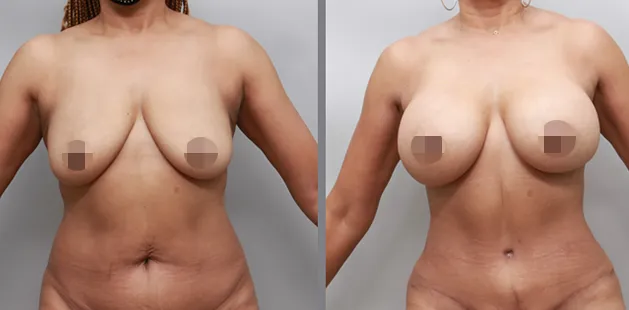
Trustindex verifies that the original source of the review is Google. I had a great experience with Ditesheim Cosmetic. Everyone was wonderful from initial consultation to 10months post op. Dr. Ditesheim really takes the time to listen to what you want and provides you with expected outcomes and options. Day of surgery, knowing my expectations, he made some last-minute changes to improve my chances of getting the desired outcome. I am very much pleased with my results. I previously had an adominoplasty 20yrs ago with a different physician and was never satisfied. Dr. Ditesheim recommended Lipo 360 with renuvion for skin tightening along with BBL to have better shape. It was apparent with a few days that I was going to be happy with my choice. Dr. D and the staff followed up on me daily after discharge for almost a week and their concern continues. I definitely recommend Ditesheim Cosmetic for your cosmetic needs. I plan to have two more procedures, and they will be with Dr. Ditesheim. Pictures I have attached are 6months Post-Op Before/AfterPosted on GoogleTrustindex verifies that the original source of the review is Google. I have nothing but amazing things to say about Dr. Ditesheim and his entire team. I’ve had two procedures with him, and my partner has had one, and we are both beyond happy with the results. I have lipedema, and I searched all over the United States for a plastic surgeon who truly specializes in this condition and has strong, real before-and-after results. After extensive research, I finally found Dr. D. From the first consultation, I felt confident, informed, and cared for, which made it easier to move forward with surgery for a lipo on my legs. The results exceeded my expectations, and a year later I returned for a breast augmentation. My breasts turned out absolutely beautiful, exactly the size, shape, and look I wanted, it fits My body 100%. My partner also had HD liposuction, and he looks incredible. We both fully trust Dr. D’s expertise, recommendations, and artistic eye and the results have consistently been even better than we imagined. The team is exceptional, friendly, professional, kind, and genuinely happy to help. We travel from Virginia to Charlotte specifically to be treated there because of how much we trust Dr. D and his staff. That alone speaks volumes. I’m already planning my next visit, and I wouldn’t consider going anywhere else.Posted on GoogleTrustindex verifies that the original source of the review is Google. Amazing experience with Dr. Ditesheim and staff. Had gyno surgery four months ago and the improvements have become significant in recent weeks beyond the initial surgery improvements. In total, I spent only a few hours in the office well tailored to my college schedule. I highly recommend Dr. Ditesheim and will for sure come back for any future cosmetic surgeries. Be patient with results, I promise it will be worth it in a few months.Posted on GoogleTrustindex verifies that the original source of the review is Google. The time and details provided by Dr. Ditesheim was more than expected and made me feel very comfortable with proceeding with the surgery. My results are better than expected. His staff are all very nice and helpful. It has and continues to be a pleasurable experience. I would highly recommend Dr. Ditesheim for any cosmetic procedure you are considering.Posted on GoogleTrustindex verifies that the original source of the review is Google. Had abdominoplasty and hi-def lipo following an 80 lb weight loss. I love my results and would highly recommend Dr. D. Absolutely well worth it.Posted on GoogleTrustindex verifies that the original source of the review is Google. I had gynecomastia surgery with Dr. Ditesheim and am now 4 months post-op. From the initial consultation to every follow-up, Dr. Ditesheim and his team have been nothing short of exceptional. He took the time to really understand my concerns, clearly explained the procedure and recovery, and set realistic expectations for the healing process. I never felt rushed or like “just another patient” — I felt like I was in the hands of a true professional who genuinely cares about his work and his patients. The results speak for themselves. My chest looks significantly better, more natural, and I feel much more confident overall. Healing was smooth, and Dr. Ditesheim was always accessible for questions and check-ins. Even now, months later, he continues to follow my progress and provide helpful feedback. If you’re considering gynecomastia surgery or any cosmetic procedure, I highly recommend Dr. Ditesheim. He combines surgical skill with a great bedside manner, and the whole office operates with professionalism and compassion. This procedure was a huge confidence boost — I only wish I had done it sooner. Thank you to Dr. Ditesheim and his team for helping me feel like a new person.Posted on GoogleTrustindex verifies that the original source of the review is Google. Great Gynecomastia result and experience! Everyone in the office was super friendly, and Dr. Ditesheim openly answered all of my questions and concerns.Posted on GoogleTrustindex verifies that the original source of the review is Google. Had gyno removed and it was an absolute awesome experience I’m 3months post surgery and more than satisfied. No scars and nobody can even tell where the incisions was. Highly recommend Dr Ditesheim!Posted on GoogleTrustindex verifies that the original source of the review is Google. From the moment I walk into Dr Ditesheim's office, he and his team make me feel so comfortable and at ease every single time. I recently had an earlobe repair done on both ears and the results are amazing! Dr Ditesheim always provides knowledgeable care and takes time to answer all of my questions. I've been a patient for about 17 years and will continue to see Dr Ditesheim for all of my cosmetic procedures.
We Treat These Five Patient Groups
Gynecomastia affects men at every stage of life. These are the five groups we see most often:

Teens
Adolescents whose breast tissue has not resolved on its own and is causing real social anxiety during developmentally critical years.

Athletes & Bodybuilders
Active men whose glandular tissue — sometimes linked to supplement or pro-hormone use — is hiding the muscle they’ve worked hard for.
Large-Frame Men (250+ lbs)
Larger-frame patients whose chest contour needs to look proportional and natural for their build, not artificially flattened.

Post-Weight-Loss Men
Men who have lost significant weight and are left with residual tissue, fat, and sagging skin — typically a Grade 3 or 4 reconstruction.
Men Over 50
Men whose gynecomastia is driven by age-related shifts in testosterone.
Frequently Asked Questions
Are the results permanent?
Yes. Once glandular tissue and fat cells are removed, they don’t grow back. Maintaining a stable weight protects your new contour long-term.
Where will my scars be?
In hidden locations — typically the lower edge of the areola or a small spot in the armpit. For most patients these scars fade to nearly invisible. Grade 4 cases require a longer scar in the natural chest crease.
Does the procedure hurt?
During surgery, no — the chest is fully numb. Afterward, most men describe a mild soreness similar to a hard chest workout, easily managed with medication.
When can I work out again?
Light walking within a few days. Most men return to the gym at two weeks if they’re feeling comfortable. Heavy lifting and chest-specific work at four to six weeks.
How long does the surgery take?
Grade 1 and 2: about one to two hours. Grade 3 and 4: two to four hours, depending on complexity.
Do I have to be put to sleep?
No. Most Grade 1 and 2 patients choose our awake procedure under local anesthesia. General anesthesia is the better choice if you’re particularly anxious, if surgery will run long, or for complex Grade 3 and 4 cases.
Does health insurance cover male breast reduction?
Insurance providers classify gynecomastia surgery as cosmetic and generally don’t cover it. We offer financing to make the procedure accessible.
Take the first step toward a chest you don't have to think about.
In one consultation, Dr. Ditesheim will identify your grade, walk you through your treatment options, and give you a price. Most men leave the visit with a clear plan and a surgery date.
What to Know About Gynecomastia Surgery
Complications
Though uncommon, a hematoma (blood collection) can occur in the first 48 hours after surgery. If it does, you’ll be seen in the office and most likely need a procedure under general anesthesia to wash out the hematoma — your expected result is not changed by this. Other less common complications include infection, drainage from around the nipple, or abnormal nipple healing (discoloration, scabbing, crusting). All patients are covered by CosmetAssure (included in your surgical fees), so a return to the operating room does not create additional out-of-pocket cost.
Crater Deformity
A crater deformity is when the area around the nipple appears depressed compared to the surrounding chest, like a small pothole. It can be anatomical (the patient’s own chest muscle anatomy doesn’t follow the textbook — a well-developed middle pectoralis with thin or absent lower muscle leaves the nipple sitting below the muscle edge) or surgical (over-removal of tissue under the nipple without proper reshaping of surrounding thickness). Identifying chest muscle anatomy before surgery is critical. When a crater deformity does occur, treatment usually involves fat grafting, sometimes combined with skin excision or additional contouring.
Scars
For most patients, the scar is very small — a 4 mm scar in the hair-bearing armpit and a 1–3 cm scar at the lower border of the nipple. In over 90% of patients, scars heal almost invisibly. Rarely, scars are raised or thicker, usually in mid-teens. Stitches may dissolve on their own or be removed in the first week. You can shower the next day and return to swimming or beach water after two weeks. Larger scars are required for patients with significant weight loss (over 100 lb); these can be hidden in the chest crease or around the areola.
Recurrence
Gynecomastia rarely returns. When glandular tissue is fully or nearly fully removed surgically, the chance of regrowth is very small. Men who developed gynecomastia from pro-hormone use have a slightly elevated but still small risk. Many liposuction-only patients also maintain great long-term results.
Revision Policy
Dr. Ditesheim’s commitment: design and execute a surgical plan that respects your parameters and restores your confidence. Sometimes more than one procedure is needed. Sometimes healing takes longer than expected. Sometimes the result isn’t what was hoped for. The policy is transparent: Dr. Ditesheim does not charge a surgical fee for a second procedure. If both surgeon and patient agree to return to the operating room, the patient is responsible only for operating room and anesthesia charges (typically $2,500–$3,500). Parameters: within one year of your original surgery date, your weight has stayed within 5 lbs. of pre-op weight, and surgeon and patient both agree the result can be meaningfully improved.